Trezor.io/start:Mastering Your Crypto Security
In the digital age, "being your own bank" is no longer just a catchy slogan—it is a fundamental necessity for anyone holding digital assets. With the rise of decentralized finance, the responsibility of securing your private keys falls entirely on your shoulders. This is where Trezor, the world's first hardware wallet, becomes your most trusted ally.
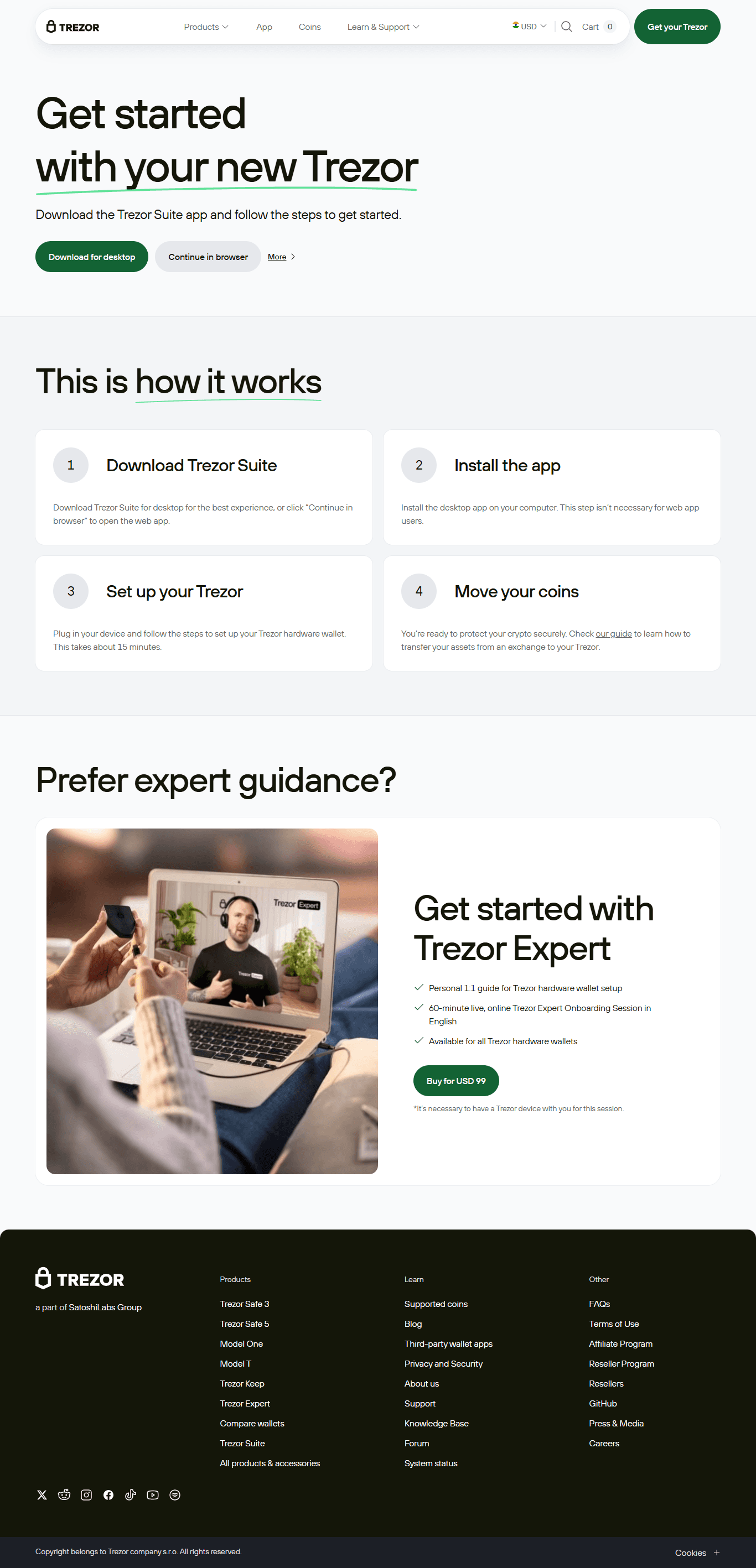
If you have recently acquired a Trezor device, your journey begins at Trezor.io/start. This comprehensive guide will walk you through the setup, the philosophy of cold storage, and how to maximize the Trezor Suite ecosystem.
1. Why Trezor? The Golden Standard of Cold Storage
Before diving into the setup, it’s essential to understand why hardware wallets are superior to keeping your funds on an exchange or a mobile app.
Offline Key Storage: Your private keys—the "DNA" of your crypto—never leave the device. They are generated and stored in an isolated environment, far from the reach of hackers and malware.
Physical Verification: Every transaction requires a physical press of a button on the device. Even if a hacker gains remote access to your computer, they cannot move your funds without your Trezor in hand.
Open-Source Transparency: Unlike many competitors, Trezor’s firmware and hardware designs are open-source. This means the global security community constantly audits the code to ensure there are no "backdoors."
2. Step-by-Step: The Trezor.io/start Onboarding Process
Setting up your Trezor is a streamlined experience designed for both beginners and experts. Follow these steps carefully to ensure a secure installation.
Phase 1: Unboxing and Physical Inspection
Before plugging anything in, inspect the box. Every Trezor comes with tamper-evident seals. If the silver holographic seal looks peeled or damaged, do not use the device and contact Trezor support immediately.
Phase 2: Connecting to Trezor Suite
Navigate to Official Site: Go to Trezor.io/start. Always double-check the URL to avoid phishing sites.
Download Trezor Suite: This is the desktop application (available for Windows, macOS, and Linux) that acts as the interface for your wallet.
Connect Device: Use the provided USB cable to connect your Trezor (Model One, Model T, or Safe 3) to your computer.
Phase 3: Firmware Installation
Out of the box, Trezor devices ship without firmware to ensure you are installing the latest, most secure version directly from the source. Click "Install Firmware" in the Suite and wait for the process to complete.
3. The Core of Security: The Recovery Seed
This is the most critical part of the Trezor.io/start process. Your Recovery Seed (a 12 to 24-word phrase) is the only way to recover your funds if your device is lost, stolen, or broken.
The Golden Rules of Seed Phrases:
RuleActionNever DigitalizeDo not take a photo, save it in a PDF, or store it in the cloud.Physical OnlyWrite it down on the provided recovery cards with a permanent marker.Hidden StorageStore your cards in two separate, fireproof, and waterproof locations.No SharingTrezor staff will never ask for your seed phrase. Anyone asking for it is a scammer.
4. Deep Dive into Trezor Suite Features
Once your wallet is set up, Trezor Suite becomes your command center. It is designed to provide privacy and control without needing technical expertise.
🛡️ Privacy Tools (CoinJoin)
For Bitcoin users, Trezor Suite offers CoinJoin integration. This process "shuffles" your coins with others, making it nearly impossible for blockchain analytics firms to track your spending habits or wealth.
💱 Buy, Sell, and Exchange
Through regulated partners like Banxa or MoonPay, you can buy crypto directly within the Suite. This eliminates the risk of sending funds to the wrong address when moving crypto from an exchange to your wallet.
🔑 Passphrase Feature (Hidden Wallets)
For advanced users, the Passphrase (sometimes called "the 25th word") allows you to create hidden wallets.
Standard Wallet: Accessed with your PIN.
Hidden Wallet: Accessed with your PIN + a custom word.
This provides "plausible deniability"—even if someone forces you to unlock your Trezor, they can only see the funds in the standard wallet.
5. Security Best Practices for 2024 and Beyond
Setting up your device at Trezor.io/start is just the beginning. Maintaining security is an ongoing habit.
Verify on Device: Always check the address shown on your computer screen against the address shown on your Trezor's physical screen. If they don't match, your computer is compromised.
Use a Strong PIN: Avoid simple sequences like
1234or0000. Trezor’s unique "shuffling keypad" prevents screen-recording software from stealing your PIN.Firmware Updates: Check Trezor Suite regularly for firmware updates. These often include security patches and support for new coins.
Bookmark the Site: To avoid "Google Ad" phishing scams, bookmark Trezor.io and only access the site through that link.
6. Troubleshooting Common Setup Issues
Device Not Detected: Try a different USB port or a different cable. Ensure you aren't using a "charge-only" cable.
Stuck on Bootloader: If your device enters bootloader mode, don't panic. This usually happens during a firmware update. Follow the prompts in Trezor Suite to resume.
Invalid Seed: If you are performing a "Dry Run Recovery" and the seed fails, ensure you are entering the words in the correct order and checking for spelling errors based on the BIP-39 word list.
Conclusion: Your Future is Secured
By following the steps at Trezor.io/start, you have taken the single most important step in your crypto journey: transitioning from a custodial user to a self-sovereign owner. Whether you are holding Bitcoin for the next decade or managing a diverse portfolio of altcoins, Trezor provides the infrastructure to keep your assets safe from the vulnerabilities of the internet.